Insect Detection
AI & Data
Semester programme:Artificial Intelligence
Client company:HAS University of Applied Sciences
Project group members:Sina Sharifi
Sami Al Hzay
Project description
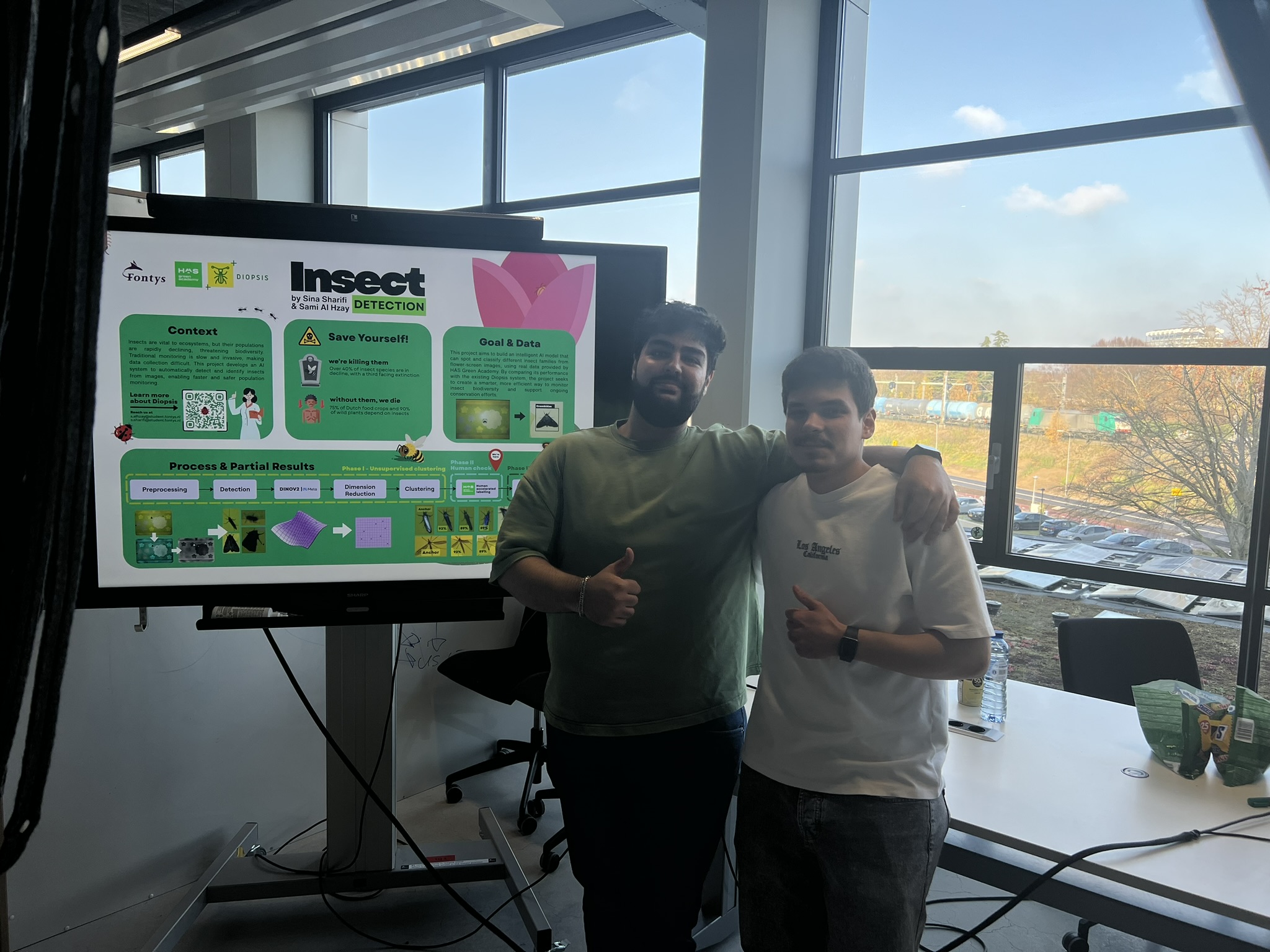
This project aims to build an intelligent AI model that can spot and classify different insect families from flower-screen images, using real data provided by HAS Green Academy. By comparing its performance with the existing Diopsis system, the project seeks to create a smarter, more efficient way to monitor insect biodiversity and support ongoing conservation efforts.
Context
Insects are vital to ecosystems, but their populations are rapidly declining, threatening biodiversity. Traditional monitoring is slow and invasive, making data collection difficult. This project develops an AI system to automatically detect and identify insects from images, enabling faster and safer population monitoring.
Results
We have implmented a clean training pipeline that can learn and adapt to new species quite quickly without need for a lot of technical knowledge. The standing issue was the previous developers work couldnt identity properly or classify new species whilst the problem is open-ended. New species emerge at different times, seasons or locations so a closed list of insects doesnt solve this. Our solution works with embeddings of the detected and cropped insect data, which captures many more dimensions, and combine those embeddings with clustering models to create our own taxonomy of unlabelled insect data.
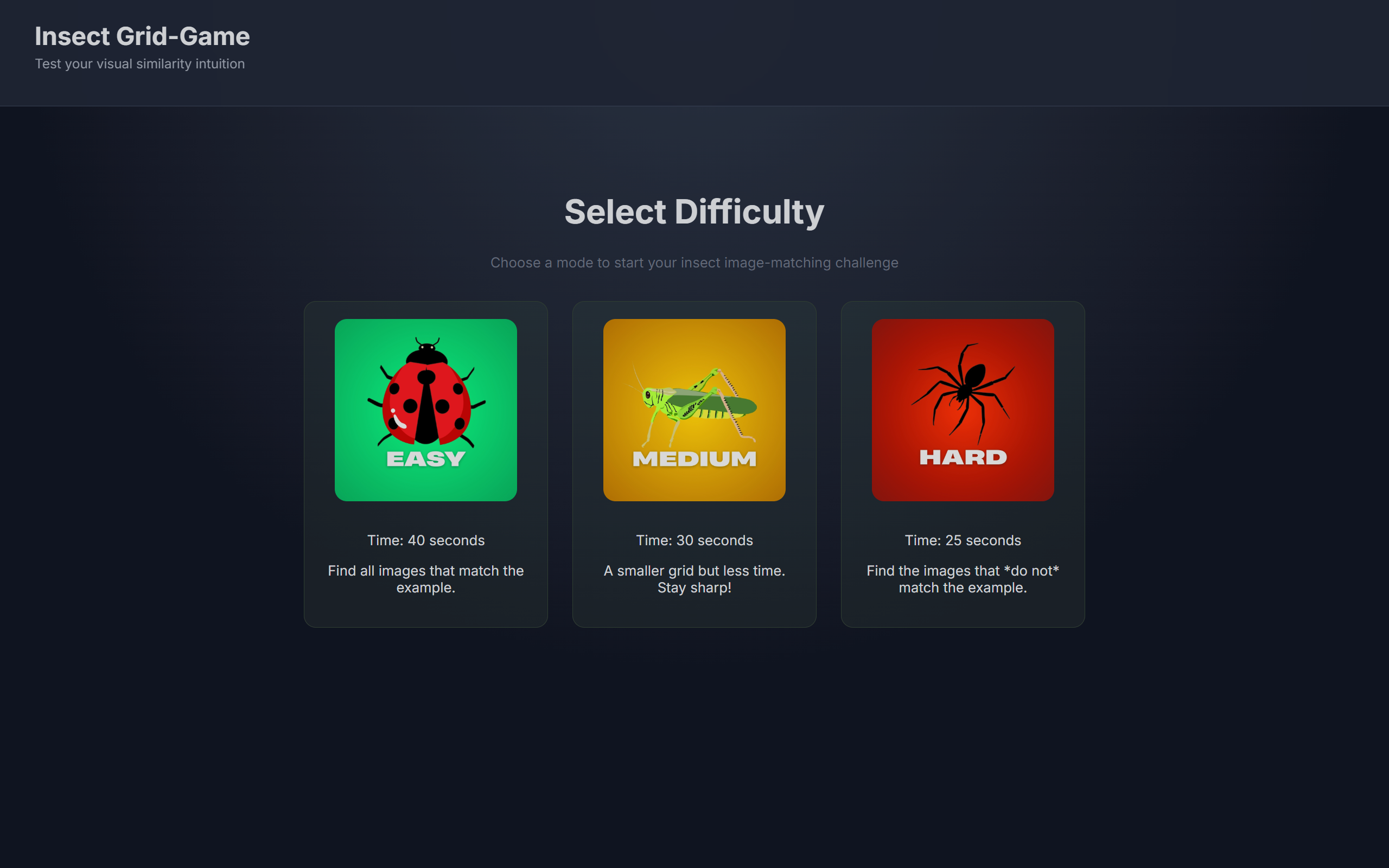
Additionally, for the poster event during the midterm, we prepared a game that helps protray the problem to our audience/ users. It is a grid-game that presents an example image, then in a grid of images that are from the data, the user must pick the images of insects they think are the same family of the example image. Through this gamification, our audience was placed in our model's position were able to see the same difficulties and obstacles we faced.
About the project group
We are a two person group. We both completed Al Core semester. We began with more members but things took a turn so we have worked on this project as a two man group. We worked consistently in-person and online, sometimes on days off and sometimes till late on the weekends to reach our deadlines. The project was conducted using the CRISP-DM methodology under the supervision of our technical tutor Iman, Process tutor Qin and our product owner, Simona.