Alzheimer's App
AI & Data
Semester programme:Software Engineering
Client company:Solvid
Project group members:Pricopi,Ştefan Ş.A.
Partalov,Miroslav M.S.
Burhenne,Sjoerd S.J.H.
Umwiza,Soleil S.
Potgieter,Jan-Hendrik J.H.
Mahadew,Jay J.D.
Project description
The Alzheimer chatbot application is designed as a supportive digital companion in the healthcare sector, aimed at people who care for or interact daily with loved ones affected by Alzheimer’s disease. Its context focuses on easing the emotional and practical challenges caregivers face by providing clear, accessible information, daily guidance, and empathetic support.
The app helps users understand Alzheimer’s symptoms and progression, offers advice on managing everyday situations (such as communication difficulties, memory loss, or behavioral changes), and supports caregivers in making informed decisions. By being available at any time, the chatbot acts as a reliable first point of assistance, reducing stress and helping caregivers feel less alone while improving the quality of care for patients.
Context
The application is designed to support individuals who care for loved ones affected by dementia or Alzheimer’s disease by providing personalized guidance, while strictly adhering to the instructions and safeguards defined in the RAG framework. The central research question and primary design challenge focus on GDPR compliance, specifically how to deliver meaningful, personalized assistance without violating data protection regulations or compromising user privacy.
Results
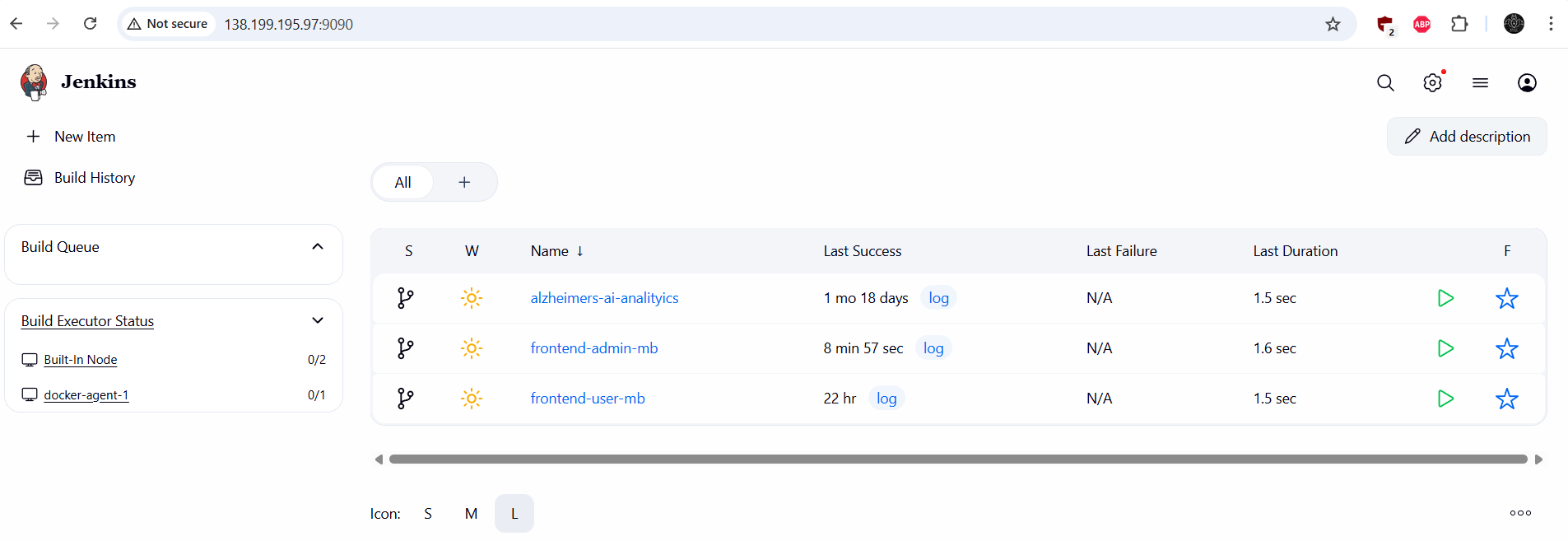
The result of this project is a fully functional Alzheimer support chatbot application deployed on a Hetzner server, comprising a complete frontend, backend, and AI-powered chatbot. The system includes fully operational CI/CD pipelines managed via Jenkins, enabling automated builds, testing, and deployment. The application has been thoroughly validated through stress testing and multiple layers of security and quality assurance, including OWASP ZAP, Bandit, Ruff, Black, and dedicated hallucination tests for the AI component. Both unit and integration tests are executed as part of the CI process to ensure system reliability and correctness.
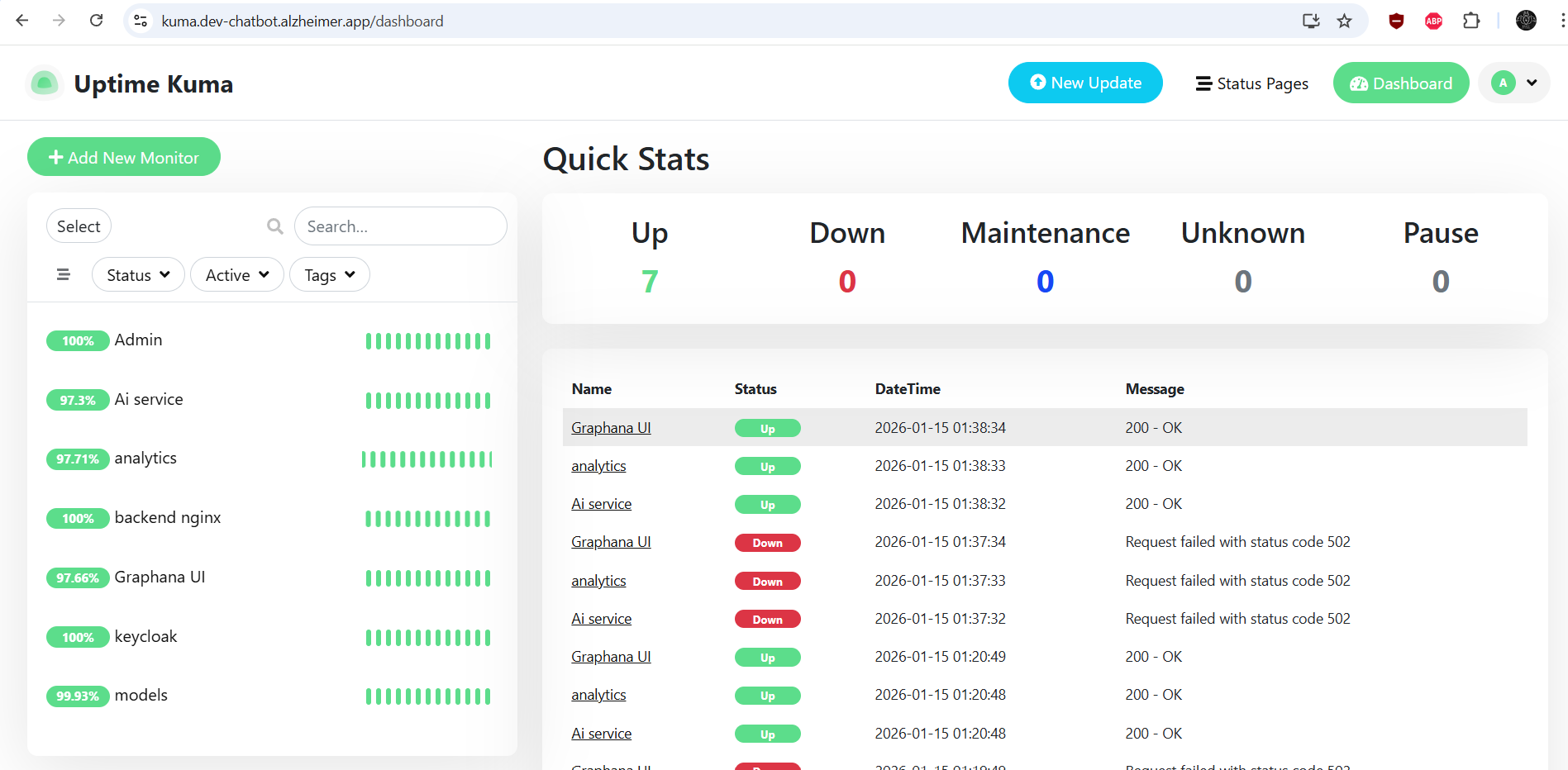
From an operational and compliance perspective, Keycloak is deployed on the server to handle authentication and role-based access control (RBAC), while Uptime Kuma provides continuous system monitoring. Comprehensive GDPR documentation and code documentation, including Architecture Decision Records (ADRs), were produced to ensure transparency, maintainability, and legal compliance.
About the project group
The project was carried out within the Software Complex Systems course, working three days a week and following agile methodology with three-week sprints, stand-ups, and client deliveries at the end of each sprint. The research process followed the DOT framework which guided the exploration of user needs, GDPR requirements, and technical constraints. By combining an iterative development workflow with a structured research methodology, the team was able to continuously refine the solution while ensuring that both user experience and legal compliance remained central throughout the project.