Enjin
Future Software Technologies
Semester programme:Open Learning - Main
Client company:Makumi
Project group members:Trandafir Daniel
Evangelista Giuseppe
Quinten Cornelis Willem Maaskant
Zahirna Iryna
Project description
Many companies do not have any active policies regarding the usage of Generative AI in their work environments, however due to its rapid onset it was swiftly taken up haphazardly by numerous industries in a race to the top where no one knew what the finish line looked like. This has now created a problem where many companies use AI tools, but they do not possess the means to properly regulate, monitor and properly utilise these tools.
Thus, the goal of our project is to simulate, through a gamified experience, the impact that AI has on the workplace environment and to encourage discussion on the topic of AI in general. The core question that our project is trying to answer is the following:
“How can game mechanics model AI decisions to reflect real-world ethical and policy consequences?”
Context
This project investigates how game mechanics can simulate AI decision-making processes so that players experience the technical, ethical, and organizational consequences of design choices before such systems are implemented in the real world.
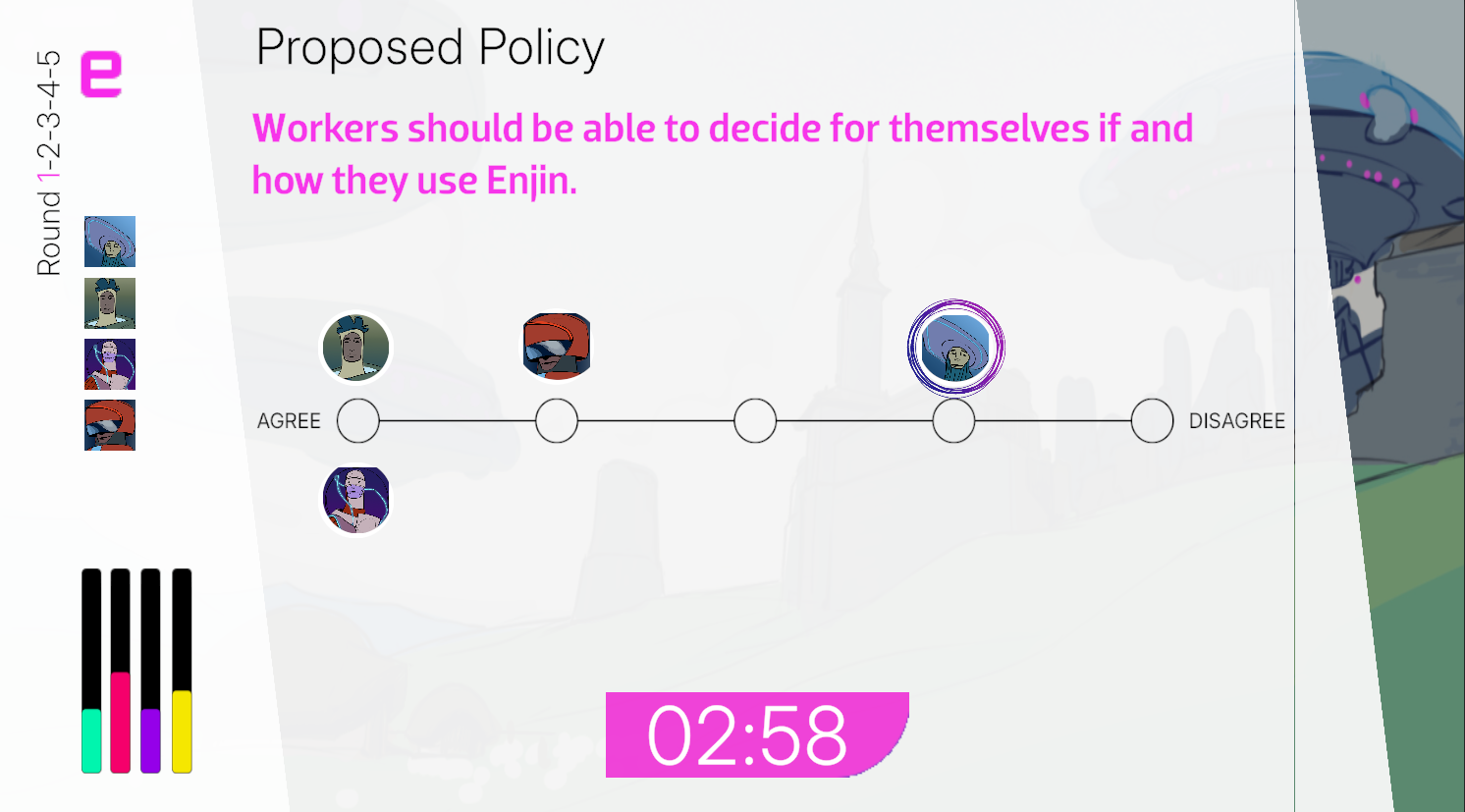
The research focuses on developing a serious game that encourages discussion about AI in a dynamic environment driven by player decisions (or lack thereof). Players get to vote on policies related to the implementation and usage of AI, which influences the company’s and employees’ future over time. Through these interactions, participants experience how decisions related to fairness, efficiency, transparency, safety, or governance can create intended and unintended consequences across organizations and society.
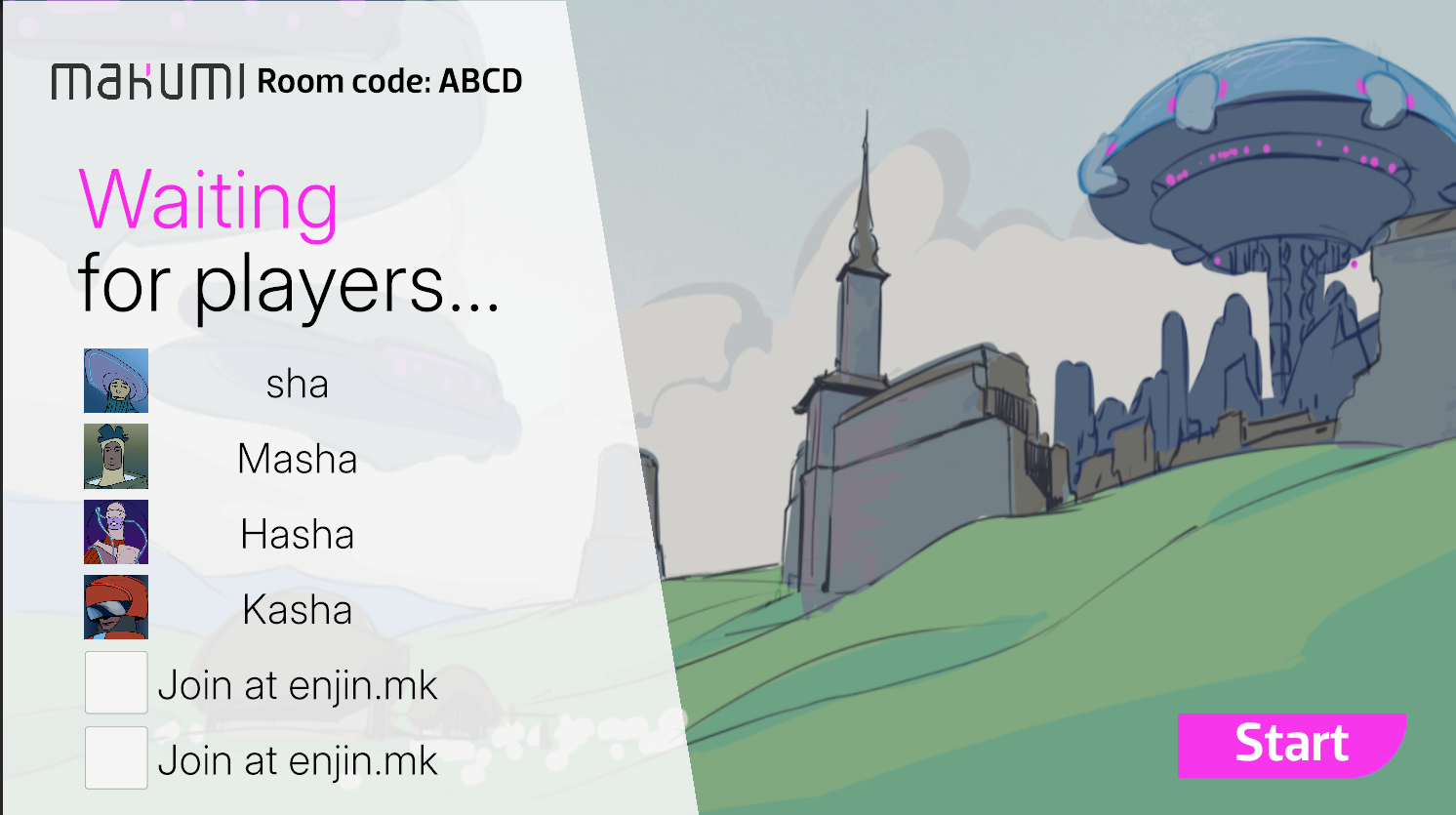
No live AI models are used; the game functions similarly to Kahoot or Jackbox games - players connect via their phones / laptops to a host. The host is represented by a separate computer running a game made in the Unity Game Engine. The system is intentionally designed to remain understandable for non-expert players while still simulating the complexity of discussion. The outcome is not a finished commercial product, but a validated conceptual and technical foundation for a serious game about AI governance and responsibility.
Results
The main outcome of our project is that the core purpose of the game has been successfully incorporated: encouraging discussion about AI usage. This was the main goal we aimed to achieve throughout the development process. The game was tested both conceptually and technically, and the results indicate that it has potential value for its intended context.
On a conceptual level, the idea was presented to a potential client group and received generally positive feedback. Two organisations showed interest in potentially incorporating the game within their own company. This suggests that the concept is relevant, has practical appeal, and could create impact by supporting conversations about AI in professional environments.
During development, we also received feedback from professionals with expertise in the field. Their input helped us improve the structure, content, and overall direction of the game. This feedback was valuable because it allowed us to better align the game with its intended purpose and target audience.
In addition, we tested the game with players. These playtests confirmed that the game can stimulate discussion and reflection around AI usage. The feedback also provided useful insights into areas that could be improved further, such as clarity, flow, and player experience. These recommendations can be passed on to the stakeholder for future development.
From a technical perspective, the project is currently positioned at Technology Readiness Level 6. This means that the game has been developed and tested as a functional prototype in a relevant environment. While it is not yet a fully finished or market-ready product, it is advanced enough to demonstrate its intended function and value.
About the project group
Together as a group we worked on this project for an entire OL semester, narrowing down and focusing the initial concepts our client had into a tangible, playable experience. Two of our members are in Semester 4 (Daniel & Giuseppe) and two are in Semester 2 (Iryna & Quinten).