Robocup@Home
Future Software Technologies
Semester programme:High-Tech Embedded Software Engineering
Research group:Future Software
Project group members:Atanasov, Veselin V.V.
Kurtev, Viktor V.Z.
Popov, Aleksandar A.L.
Bück, Damiën D.
Elands, Sabe S.
Project description
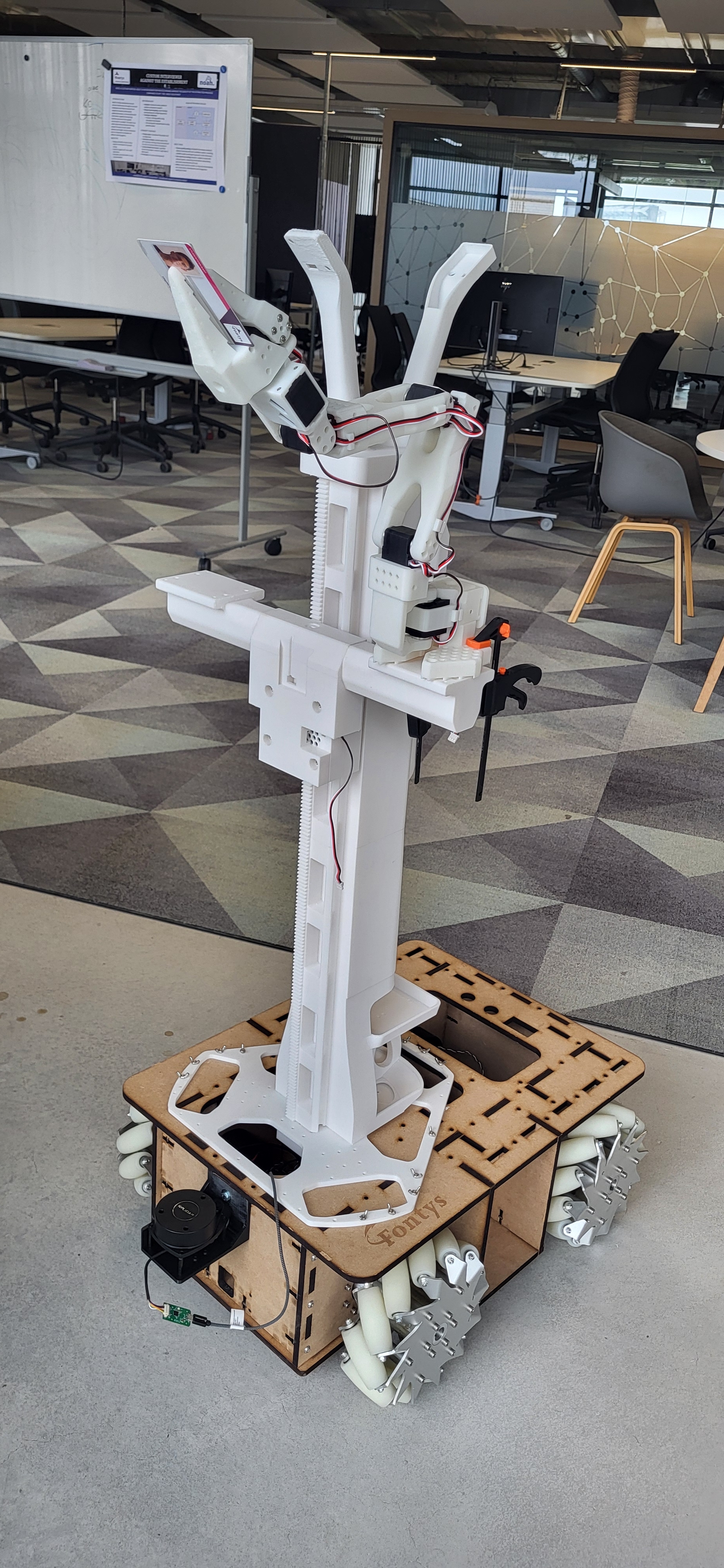
The main design challenge of this project was to successfully integrate the SO101 robotic arm with a mobile cart platform while enabling reliable object manipulation. This required combining movement planning for the robotic arm and cart with precise gripper control capable of detecting and responding to object load. The project focused on ensuring that the robot could accurately navigate, position its arm, and grasp objects safely and consistently in a RoboCup@Home environment. Key challenges included coordinating arm and base movements, implementing load-aware gripping to prevent objects from slipping or being damaged, and integrating all components into a single software architecture. The goal was to create a system that could perform household assistance tasks autonomously and robustly while remaining flexible for future development and testing.
Context
This project is situated in the field of service robotics and domestic automation, specifically within the context of the RoboCup@Home competition. RoboCup@Home focuses on developing robots that can assist people with everyday household tasks by combining navigation, object manipulation, perception, and autonomous decision-making.
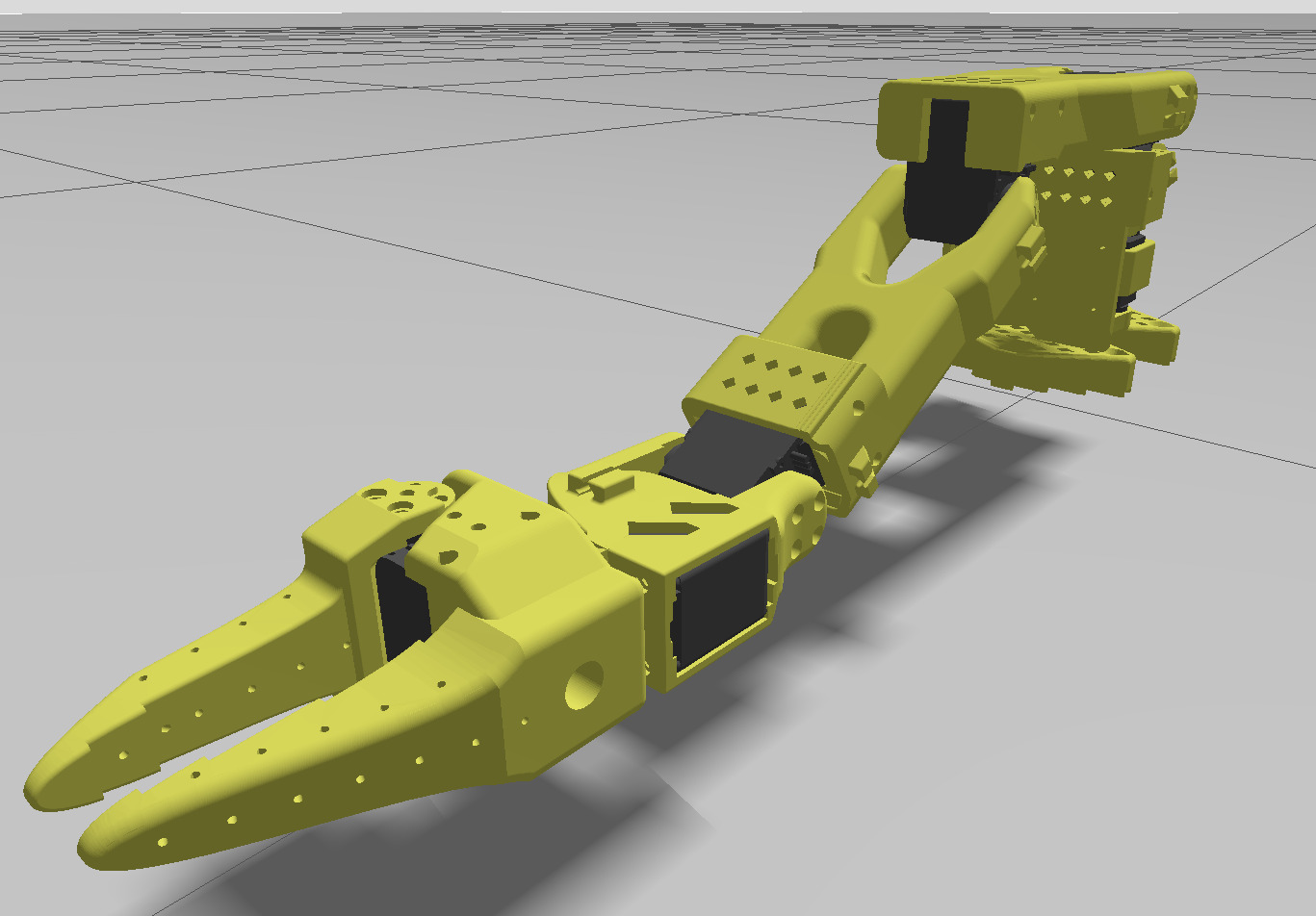
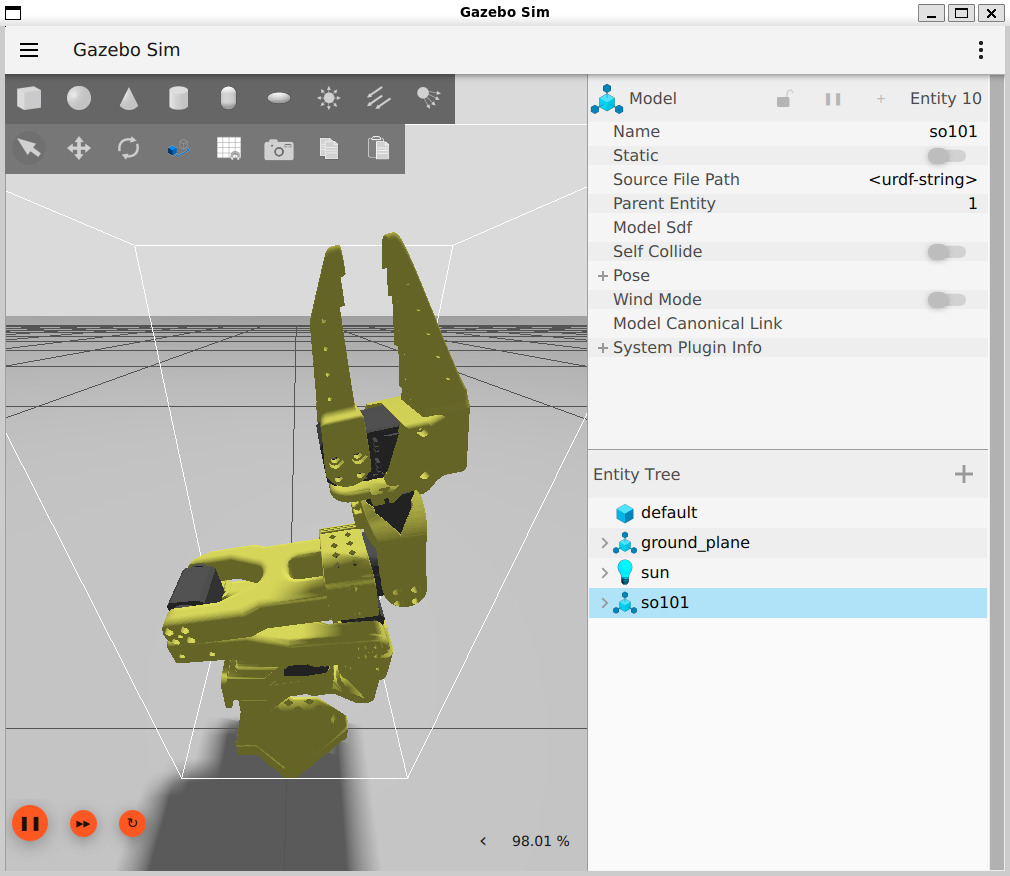
The project involved the development, simulation, and integration of an SO101 robotic arm mounted on a mobile cart platform. The system was designed to interact with objects in a household environment, requiring coordination between robot mobility and manipulation. A key focus was enabling the robot to move to target locations, position its arm accurately, and grasp objects using a gripper capable of detecting load and adjusting its grip accordingly.
As students from the Technology and Software programs with no prior robotics experience, the project provided an opportunity to explore robotics software, simulation tools, motion planning, hardware integration, and autonomous control systems. The resulting platform serves as a foundation for future RoboCup@Home tasks and further development in service robotics.
Results
The most important outcome of the project was the successful implementation of a pick-and-place system using the SO101 robotic arm integrated with a mobile cart platform. The robot was able to execute planned arm movements, control the gripper, and pick up and place objects in a controlled environment. This demonstrated that the core hardware and software components could work together as a functional robotic manipulation system.
Another important outcome was the integration of load-aware gripper control. By monitoring the load on the gripper, the system could better determine whether an object had been successfully grasped, improving reliability compared to a purely position-based approach. In addition, the project resulted in a software architecture that combines arm control, gripper control, and movement planning, providing a foundation for future RoboCup@Home development.
Validation was performed through repeated testing of pick-and-place tasks in simulation and on the physical platform. These tests showed that the robot could consistently execute the required sequence of actions, including approaching an object, grasping it, transporting it, and placing it at a target location. The successful completion of these tasks confirmed the feasibility of the integrated system and identified areas for future optimization, such as improved object detection and autonomous navigation.
Based on the achieved results, the project can be positioned around Technology Readiness Level (TRL) 4–5. Individual technologies, including arm control, gripper sensing, and motion planning, were validated and integrated into a working prototype. The system was tested in a relevant development environment and demonstrated the key functionality required for service robotics applications. While further work is needed to achieve fully autonomous operation in real-world household environments, the project successfully established a functional proof of concept and a solid basis for future RoboCup@Home participation.
About the project group
Our project group consists of students from the Technology and Software programs, with little to no prior experience in robotics. Throughout the project, we gained practical knowledge by researching, experimenting, and developing solutions for the SO101 robotic arm platform and its integration with a mobile base for the RoboCup@Home challenge.
We worked on the project four out of five days each week, collaborating closely as a team to divide tasks, share knowledge, and solve technical challenges. Our work included software development, simulation, motion planning, system integration, and testing. We followed a hands-on and iterative approach, continuously improving the system through regular development, testing, and team discussions.